2.5
Tobacco

Stock image of tobacco, 2021
Image used as input for modelling the leaf of the sculpture. This depiction was first seen used in advertising for “RAW — Classic King Size Slim Joint Rolling Papers” in New York City. Author: unknown
From the late nineteenth- into the mid-twentieth century, the harbour district around Cruquiuseiland formed a central component of Amsterdam’s expanded Entrepôt system— an extensive network of bonded warehouses designed for the storage and redistribution of international goods. Tobacco was among the most significant commodities passing through this infrastructure.
The Entrepôt operated as a customs-free zone, allowing goods to circulate through the port before entering European markets.
Both the older Entrepotdok and the later New Entrepôt, whose long rows of brick warehouses lined Cruquiusweg and the Entrepothaven, handled classic colonial staples such as coffee, tea, sugar, cocoa, spices, and tobacco. The well-known sequence of warehouses named after the days of the week formed part of this system. Although one of them, Zondag, is documented as a tea warehouse, the others functioned as mixed-use storage spaces receiving large volumes of imported tobacco, typically shipped in densely packed bales.
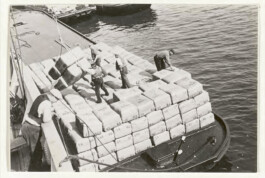
Unloading bales of tobacco into the Entrepothaven, c. 1960
The bales seen here are most likely from sources other than Indonesia, due to the period. Photographer: unknown, collection Stadsarchief Amsterdam
Once unloaded in the Eastern Docklands, tobacco was stored under customs seal for weeks or months before being directed to processors, blenders, and traders throughout Europe. Amsterdam’s commercial community — including several prominent Jewish trading families active in the sector — played a central role in this redistribution. The port thus became an important node in a worldwide network that linked cultivation, shipping, storage, and European consumption.
2.5
Tobacco
Stock image of tobacco, 2021
Image used as input for modelling the leaf of the sculpture. This depiction was first seen used in advertising for “RAW — Classic King Size Slim Joint Rolling Papers” in New York City. Author: unknown
From the late nineteenth- into the mid-twentieth century, the harbour district around Cruquiuseiland formed a central component of Amsterdam’s expanded Entrepôt system— an extensive network of bonded warehouses designed for the storage and redistribution of international goods. Tobacco was among the most significant commodities passing through this infrastructure.
The Entrepôt operated as a customs-free zone, allowing goods to circulate through the port before entering European markets.
Both the older Entrepotdok and the later New Entrepôt, whose long rows of brick warehouses lined Cruquiusweg and the Entrepothaven, handled classic colonial staples such as coffee, tea, sugar, cocoa, spices, and tobacco. The well-known sequence of warehouses named after the days of the week formed part of this system. Although one of them, Zondag, is documented as a tea warehouse, the others functioned as mixed-use storage spaces receiving large volumes of imported tobacco, typically shipped in densely packed bales.
Unloading bales of tobacco into the Entrepothaven, c. 1960
The bales seen here are most likely from sources other than Indonesia, due to the period. Photographer: unknown, collection Stadsarchief Amsterdam
Once unloaded in the Eastern Docklands, tobacco was stored under customs seal for weeks or months before being directed to processors, blenders, and traders throughout Europe. Amsterdam’s commercial community — including several prominent Jewish trading families active in the sector — played a central role in this redistribution. The port thus became an important node in a worldwide network that linked cultivation, shipping, storage, and European consumption.