3.2
Gum
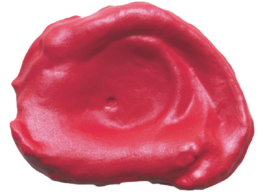
Bubble gum, 2023
An enlarged replica of a chewed and thumb-stuck piece of gum. Author: James Beckett
Chewing gum, and its sibling bubble gum, trace a curious and revealing path through modern life. Once drawn from the natural world — tree resins like mastic and chicle chewed for centuries for ritual, refreshment, and focus — gum evolved into an industrial product of astonishing reach. By the late nineteenth century, factories in North America and Europe were refining this primitive resin into a glossy, flavoured confection.
What began as a simple act of chewing soon came to embody the tempo of the modern age: casual, portable, and quietly addictive.
After the Second World War, chewing gum became a global emblem of youth and renewal. Its distribution through soldiers’ rations and mass advertising made it an informal ambassador of Western consumer culture. Bubble gum, in particular, introduced a kind of performance—the inflation and popping of colour and sound—turning a small habit into a moment of playful spectacle. From roadside stalls in Mexico City to shop counters in Tokyo, gum punctuated the everyday with its mix of sweetness and elasticity, suggesting mobility, freedom, and modernity.
With the impressive spread of the product, the material reality of the original gums went through an equally profound transformation:
The organic saps of the past have since been replaced by synthetic polymers derived from petroleum, meaning every discarded wad is a tiny piece of plastic waste.
With consumption in most countries waning, the consumption of gum, however, remains highest in Iran, with various studies levelling at an approximate 82% of the population making regular use of the product.

A woman blowing a bubble with pink bubble gum during a team-building exercise, 2010
Photograph: Jim McCluskey, Everett, Washington, US
3.2
Gum
Bubble gum, 2023
An enlarged replica of a chewed and thumb-stuck piece of gum. Author: James Beckett
Chewing gum, and its sibling bubble gum, trace a curious and revealing path through modern life. Once drawn from the natural world — tree resins like mastic and chicle chewed for centuries for ritual, refreshment, and focus — gum evolved into an industrial product of astonishing reach. By the late nineteenth century, factories in North America and Europe were refining this primitive resin into a glossy, flavoured confection.
What began as a simple act of chewing soon came to embody the tempo of the modern age: casual, portable, and quietly addictive.
After the Second World War, chewing gum became a global emblem of youth and renewal. Its distribution through soldiers’ rations and mass advertising made it an informal ambassador of Western consumer culture. Bubble gum, in particular, introduced a kind of performance—the inflation and popping of colour and sound—turning a small habit into a moment of playful spectacle. From roadside stalls in Mexico City to shop counters in Tokyo, gum punctuated the everyday with its mix of sweetness and elasticity, suggesting mobility, freedom, and modernity.
With the impressive spread of the product, the material reality of the original gums went through an equally profound transformation:
The organic saps of the past have since been replaced by synthetic polymers derived from petroleum, meaning every discarded wad is a tiny piece of plastic waste.
With consumption in most countries waning, the consumption of gum, however, remains highest in Iran, with various studies levelling at an approximate 82% of the population making regular use of the product.
A woman blowing a bubble with pink bubble gum during a team-building exercise, 2010
Photograph: Jim McCluskey, Everett, Washington, US