2.2
Ladybug Earring
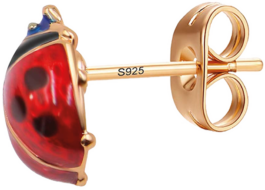
Ladybug earring, 2026
“Gold Plated S925 Sterling Silver Dainty Small Tiny Ladybug with Pave Clear Cubic Zirconia Stud Earrings Fashion Jewelry for Girls (Red Ladybug)” Source: Amazon Fashion: Clothing, Shoes & Jewelry › Children › Jewelry › Earrings › Stud
The ladybug (lieveheersbeestje) occupies a distinctive place in Dutch culture, especially within the world of children’s jewellery. Among the most common first earrings given to young girls in the Netherlands are small, enamelled ladybug studs, a tradition rooted both in folklore and modern symbolism. Historically, the ladybug has been regarded as a protective creature, its name translating to “God’s little animal,” signalling divine guardianship and good fortune. This gentle symbolism made it a natural choice for early jewellery gifts, which in the Netherlands often accompany childhood milestones such as receiving one’s first ear piercing, a birthday, or a family celebration.
During the late twentieth century, the ladybug gained a second, nationally recognised meaning. Following concerns about rising youth violence and social tensions, municipalities adopted the ladybug as the emblem of the Landelijk Monument tegen Zinloos Geweld, the national initiative against senseless violence. The creature — already associated with innocence — became an official icon of care, safety, and solidarity, appearing on public monuments, street markers, and educational campaigns.
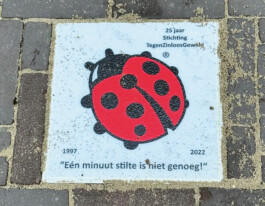
“Eén minuut stilte is niet genoeg!” (One minutes silence is not enough), 2001
The laying of the first ladybug stones in Lelystad. Photograph: unknown, source: omroepflevoland.nl
This dual heritage — folkloric protection and civic guardianship — has firmly anchored the ladybug in Dutch visual culture.
In children’s jewellery, the motif blends affection and symbolism: parents and grandparents choose ladybug earrings not only for their bright aesthetic but for their quiet promise of luck, safety, and wellbeing. As a result, the red-and-black ladybug stud has become an instantly recognisable marker of Dutch childhood, a tiny emblem carrying cultural meanings far larger than its size.
2.2
Ladybug Earring
Ladybug earring, 2026
“Gold Plated S925 Sterling Silver Dainty Small Tiny Ladybug with Pave Clear Cubic Zirconia Stud Earrings Fashion Jewelry for Girls (Red Ladybug)” Source: Amazon Fashion: Clothing, Shoes & Jewelry › Children › Jewelry › Earrings › Stud
The ladybug (lieveheersbeestje) occupies a distinctive place in Dutch culture, especially within the world of children’s jewellery. Among the most common first earrings given to young girls in the Netherlands are small, enamelled ladybug studs, a tradition rooted both in folklore and modern symbolism. Historically, the ladybug has been regarded as a protective creature, its name translating to “God’s little animal,” signalling divine guardianship and good fortune. This gentle symbolism made it a natural choice for early jewellery gifts, which in the Netherlands often accompany childhood milestones such as receiving one’s first ear piercing, a birthday, or a family celebration.
During the late twentieth century, the ladybug gained a second, nationally recognised meaning. Following concerns about rising youth violence and social tensions, municipalities adopted the ladybug as the emblem of the Landelijk Monument tegen Zinloos Geweld, the national initiative against senseless violence. The creature — already associated with innocence — became an official icon of care, safety, and solidarity, appearing on public monuments, street markers, and educational campaigns.
“Eén minuut stilte is niet genoeg!” (One minutes silence is not enough), 2001
The laying of the first ladybug stones in Lelystad. Photograph: unknown, source: omroepflevoland.nl
This dual heritage — folkloric protection and civic guardianship — has firmly anchored the ladybug in Dutch visual culture.
In children’s jewellery, the motif blends affection and symbolism: parents and grandparents choose ladybug earrings not only for their bright aesthetic but for their quiet promise of luck, safety, and wellbeing. As a result, the red-and-black ladybug stud has become an instantly recognisable marker of Dutch childhood, a tiny emblem carrying cultural meanings far larger than its size.